Preparing for your first HPDE, a non-competitive track day where you learn your car on a real road
course, doesn't need to start with a build sheet. Put a set of race brake pads on a healthy, stock
Mustang, and it's ready for its first day on track, and seat time will teach you more than any amount of
time in the shop bolting on parts. Once you're hooked, though, the order of your upgrades matters.
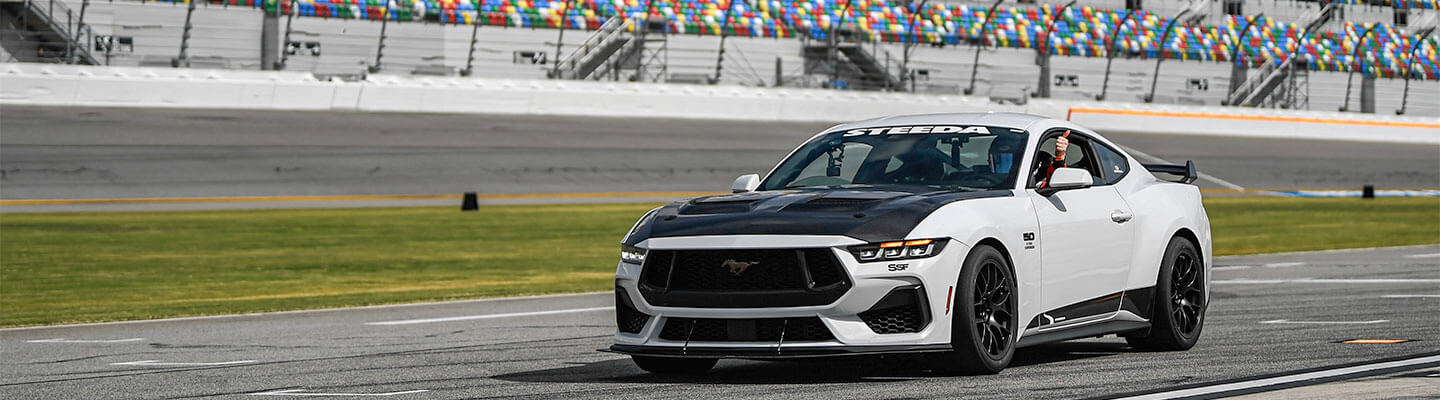
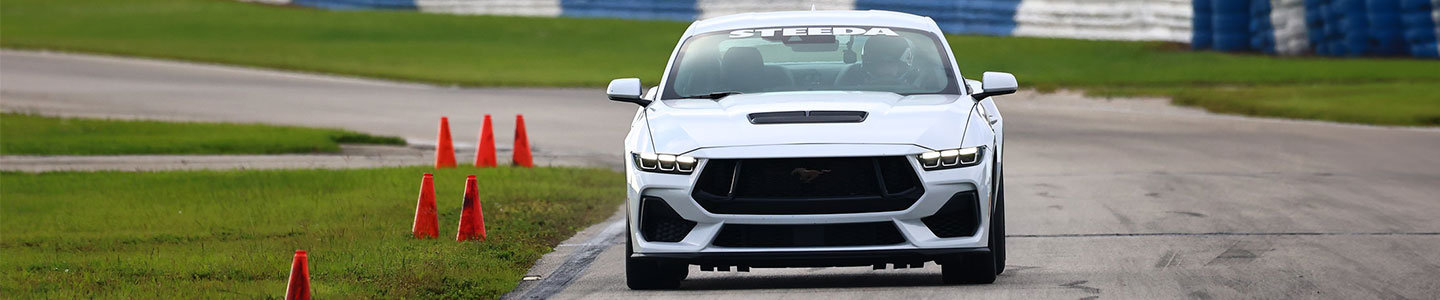
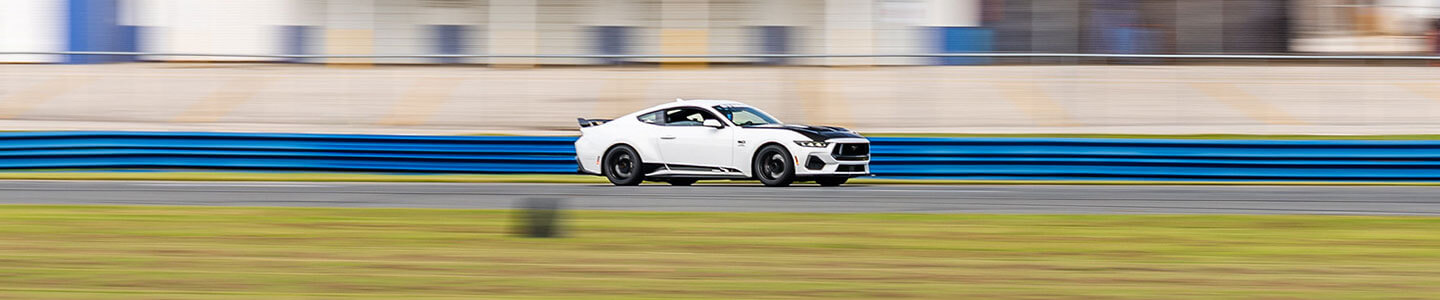
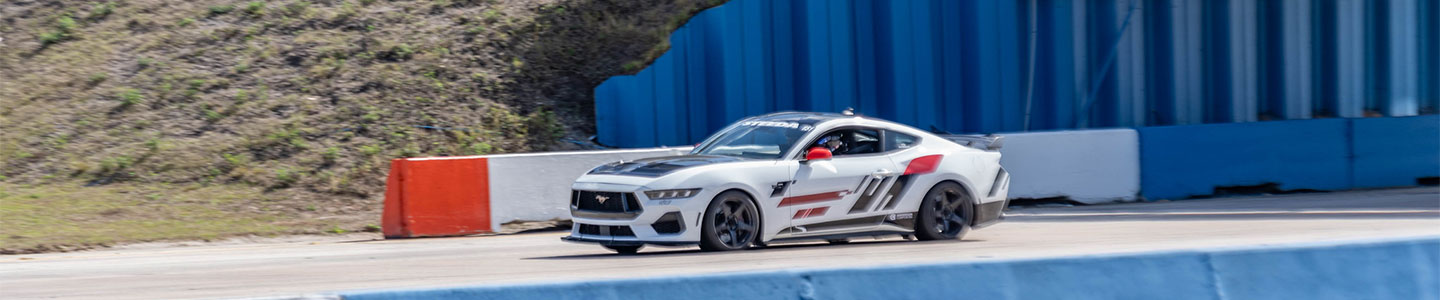
We proved that theory on our 2024 Mustang GT at Sebring: same car, same track, same driver for every lap.
Stock, it ran a 2:31. Three stages later, it ran a 2:22.5, and most of that time came from the
suspension, chassis, and tires, not the engine. Here's the order we built it in: body control and
cooling first, then chassis rigidity and grip, then brake lines, cooling, and power last.
The Results: Stock to 2:22.5 in Three Stages
Stage
What we focused on
Sebring lap
Gain
Best for
Stock
2024 GT, Performance Pack, 6-speed manual
2:31
—
Your first HPDE events
1: Body Control and Cooling
Springs, adjustable dampers, sway bars, Stop the Hop Starter
Kit, camber plates, differential cooler, alignment
A weekend track car in intermediate or advanced run groups
3: Brake Lines, Cooling and Power
Braided brake lines, racing seat, vented hood, long-tube
headers, ported heads and intake
2:22.5
1.1 s (13%)
A dedicated track car
Total
8.5 s (5.6%)
Glen Vitale, our VP of Operations, drove every lap on Sebring's 3.74-mile Full Course. Keeping him in the
seat means the lap times reflect the parts' performance, not the difference in driver experience and
skill.
Three things jumped out at us:
A stock S650 GT is already quick. The biggest variable on any track day is still the
person behind the wheel. That's why seat time is the most valuable investment you can make as a
driver.
Suspension, chassis rigidity, and grip did the heavy lifting. Stage 2 was worth more
than Stages 1 and 3 combined.
Power came last and bought the least. Everything in Stage 3, including engine work,
added up to 1.1 seconds.
What Is HPDE?
HPDE stands for high-performance driving event (some clubs call it high-performance driver education).
It's a non-competitive track day on a road course. You're typically grouped with drivers at your
experience level; novices usually get an instructor riding shotgun, and passing happens only in
designated zones when the car ahead gives you a point-by. Each track and club sets the exact rules, so
get familiar with them before you head out. Nobody hands out trophies. The point is to learn your car and
the track and rack up seat time.
If you've never driven on a road course and you're nervous, autocross is a
cheaper way to get your feet wet and build confidence behind the wheel without sharing the track with
other cars.
Stage 0: Get Your Mustang (and Yourself) Ready for Your First HPDE
Here's the good news: you don't need to modify a modern Mustang for your first HPDE, except for one thing:
brakes. Any Mustang older than 2024 will need race brake pads, and most 2024-and-newer cars without the
Performance Pack will, too. Beyond that, you need a mechanically ready car, the right gear, and as much
seat time as you can get.
Steeda's recommendation: put race brake pads on before your first HPDE. That applies to
every Mustang, including Performance Pack cars. It's a safety call. Street pads aren't made for stop
after stop at track speeds, and the end of a long straight is the worst place to find out.
Watch out for AdvanceTrac, too. With it switched on, the system brakes the rear wheels to keep the car
stable on corner exit. On track, that can wear out a set of rear pads in a single HPDE day and heat the
brake fluid well past what you'd see on the street, so check both more often than you think you need
to.
Our car ran its factory Performance Pack pads from the stock baseline through Stage 1, but don't read too
much into that. Glen is an advanced driver who runs with AdvanceTrac off, and in the advanced run group,
if the car ahead slows too early, he can simply pull out and pass. A novice who hasn't gotten a point-by
has to brake and wait, so a newer driver uses the brakes a lot more. Whether to turn AdvanceTrac off is
a call to make with your instructor as your skills grow, not a way to save pads.
Prep the car
Fresh, high-temperature brake fluid
Race brake pads with plenty of material left (our recommendation for every car)
Tires in good shape. Don't set them cold to the recommended pressure: start a few psi below it, then
adjust after your first session so they hit the recommended pressure hot
Lug nuts torqued to spec
All fluids topped up, with no leaks
A secured battery, and nothing loose in the cabin or trunk
Prep yourself
A helmet that meets your club's current rating
Clothing and shoes that meet your club's rules
Water and a plan to rest between sessions. Track days are long days.
Pass tech inspection
Most clubs send a tech form before the event, then check the car at the track: brakes, tires, wheels,
fluid leaks, battery mounting, seat belts, and loose items. Knock out everything on the form before you
load up, not in the paddock on the morning of the event.
Between sessions
Take a cool-down lap, then check tire pressures while they're still hot, lug nut torque, fluid levels, and
brake pedal feel. Small problems you catch in the paddock stay small.
Never set the parking brake when you come in. The pads and rotors are still hot and need
air flowing between them to cool. Clamping them together can damage both. Leave it in gear (or in Park)
and chock a wheel if you need to.
Glen Vitale walks through the build plan after the stock car's first
Sebring run.
Stage 1: Body Control and Cooling (-2.5 seconds)
Best for: regular HPDE in a car you also drive daily. Street-friendly:
yes.
Stage 1 is about making the car predictable. That means less body roll, a rear subframe that stays put,
and a differential that doesn't cook itself halfway through a session.
Because a road course works the rear diff far harder than the street ever will, and the heat keeps
building as long as you keep lapping. Past a certain point, that heat breaks down the gear oil's
viscosity, much like engine oil, so it gives the working internals of your differential less protection.
Just like an engine, you want to keep it from overheating. The differential cooler keeps temperatures in
check, so your last session feels like your first, which is why it went on before anything that adds
grip or power.
Get it aligned
Stage 1 wrapped up with a performance alignment at our Installation & Service
Center. Camber plates and subframe parts only pay off once the car is aligned to use them. The
right settings depend on your tires and how much street driving you do, so have it set up for how you'll
actually use the car.
Stage 1 result: 2:28.5, two and a half seconds quicker than stock.
Shop Stage 1
Want Stage 1's core in one box? Our Dual Rate HPDE Suspension
Pack bundles Pro-Action adjustable shocks and struts, dual-rate springs, and front and rear
competition sway bars for $2,269.95. Add the Stop the Hop Starter Kit, camber
plates, a differential cooler, and an alignment, and you've got most of Stage 1 covered. Not sure which
Stop the Hop kit fits your car? Our Stop the Hop kit
guide will help you figure it out.
One catch: the pack doesn't fit Mustangs equipped with MagneRide. If your car has MagneRide, check our full suspension lineup or call us for compatible parts.
Stage 1 at Sebring: 2:28.5, 2.5 seconds quicker than stock on our
timing.
Stage 2: Chassis Rigidity and Grip (-4.9 seconds)
Best for: a weekend track car in intermediate or advanced run groups.
Street-friendly: mostly; the tires, track pads, and K-Member are track parts.
Stage 2 is where the car changed the most, and where most of the time came from. It's also where it
crossed over from street car to weekend track car. The coilovers, bumpsteer kit, and shifter still work
fine on the street. The Hoosiers, the G-Loc track pads, and the competition-only K-Member are track
parts.
Competition-use parts. Some parts in this build, including the Road Race K-Member,
long-tube headers, and ported cylinder heads, are for off-road competition use only and are not legal
for use on public roads in many areas. Always check your local and state laws before installing these
parts on a street-driven car, as requirements and enforcement may vary. Your inspection station or
department of motor vehicles can help confirm what is allowed where you live.
The K-Member replaces the factory front crossmember. It's about 20% lighter than the stock piece and lets
you adjust front track width and front roll center, getting your suspension geometry back where it
belongs once the car is lowered. We raced and tested it on our #20 before it ever went on this car, and
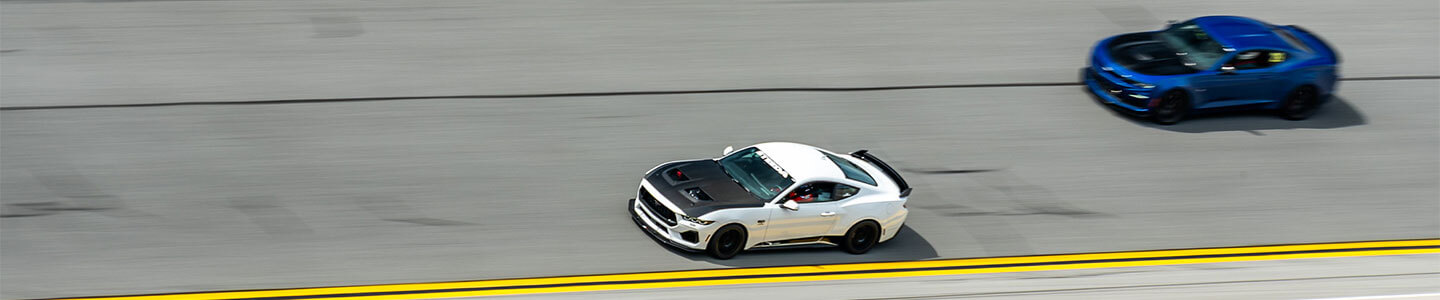
we've since tested it to 177 mph at Daytona on this HPDE GT.
Square wheels and tires
From the factory, the Performance Pack runs a narrower front tire than rear. We ran the same 325-section
tire on all four corners, which gives the front end more bite. Here's how square and staggered setups compare.
Stage 2 result: 2:23.6, 4.9 seconds quicker than Stage 1. Going in, we figured it would
run about a 2:24, the time our S550 HPDE car ran with more power and the same suspension. The 2024 car
beat it.
One honest note: this stage changed the wheels, tires, brake pads, and suspension all at once, so we can't
tell you how much of the 4.9 seconds came from the Hoosiers alone. What we can tell you is that grip and
geometry together were worth more than every other stage combined.
Shop Stage 2
You'll find this stage's core parts in our catalog, from the Pro-Action coilovers and bumpsteer kit to the
Road Race K-Member and the Trident HPDE wheel
package. Browse them all in our 2024-2027 Mustang suspension
lineup.
Stage 2 at Sebring: 2:23.6.
Stage 3: Brake Lines, Cooling and Power (-1.1 seconds)
Best for: a dedicated track car. Street-friendly: no.
We didn't touch the engine until we sorted the chassis. Stage 3 added power, plus the brake lines,
cooling, and seat that let a driver use it lap after lap.
Lets underhood heat out and reduces front-end lift by
letting trapped air escape
Street
Kooks
1-7/8 in. long-tube headers, ported intake manifold and ported Gen 4 cylinder
heads
Power
Competition only
Stage 3 result: 2:22.5, 1.1 seconds quicker than Stage 2 on the same Hoosiers. Stage 3
ran in February 2025, about a year after Stage 2, so track conditions weren't identical.
That 1.1 seconds is everything in Stage 3 combined: brake lines, seat, cooling, and power. It's the
smallest gain of the three. To be fair, power is the easier way for a novice to go faster, because it
pays off on every straight without any extra skill. But a driver who learns to carry corner speed on a
sorted chassis ends up the better driver, and on our car the stopwatch made the call: start with Stage
2.
What's on the car now
Since the 2:22.5, we've swapped to S550 Performance Pack front brakes so the car can run 18-inch wheels
and tires, with Hawk DTC-60 front and DTC-30 rear pads.
We haven't published a lap time on that setup yet.
Buying power first. Our Stage 3, with long tubes and ported heads, was worth 1.1
seconds. Stage 2 was worth 4.9.
Dropping the car without correcting bump steer. Lowering changes the steering tie-rod
angle, so the front wheels toe in and out as the suspension moves. On track, that makes the car dart
over bumps and curbing. A bumpsteer kit fixes it.
Skipping the alignment. New springs, camber plates, and subframe parts only work if
the car is aligned to use them.
Overlooking heat. Differential, coolant, and brake fluid temps climb with every lap.
Get them under control before you chase more grip or power.
Blaming the car for slow laps. Our stock GT ran a 2:31 with a seasoned racer at the
wheel. Spend on seat time and an instructor before you spend on parts.
Frequently Asked Questions
Can I take a stock Mustang to an HPDE event?
Yes. Our bone-stock 2024 Mustang GT ran a 2:31 at Sebring before we installed any parts. For safety, we
recommend putting race brake pads on before your first event, especially if your Mustang is older than
2024 or doesn't have the Performance Pack. Make sure the fluids and tires are in good condition, and
bring a helmet that meets your club's rules.
What is the first mod for an HPDE Mustang?
Race brake pads and fresh high-temperature brake fluid, then as much seat time as you can get. We
recommend race pads on every Mustang before its first HPDE, for safety. When you're ready for parts,
begin with Stage 1: springs, adjustable dampers, sway bars, the Stop the Hop Starter Kit, camber plates,
a differential cooler, and an alignment. On our 2024 GT, that stage was worth 2.5 seconds at
Sebring.
Do you need coilovers for HPDE?
Not for your first events. Our Stage 1 car ran springs and adjustable dampers. Coilovers came in Stage 2,
along with the Road Race K-Member, a bumpsteer kit, track tires, and track brake pads, and that stage was
worth 4.9 seconds.
How much faster can upgrades make a Mustang on track?
Our 2024 Mustang GT went from 2:31 to 2:22.5 at Sebring across three stages, an 8.5-second (5.6%)
improvement, with the same driver every time. Your results will depend on the track, the tires, and the
driver.
Can an HPDE Mustang still be a daily driver?
Yes, through Stage 1 and most of Stage 2. The Road Race K-Member, long-tube headers, and ported heads are
for off-road competition use only, and track tires and race brake pads are best kept for the track.
Is HPDE hard on a Mustang?
It's harder than street driving, mostly through heat and wear. Brakes, tires, and fluids take the most
punishment, and the rear differential heats up session after session, which is why we added a Stage 1
differential cooler. If you leave AdvanceTrac on, it uses the rear brakes to steady the car on corner
exit, which wears rear pads fast and adds heat to the brake fluid. Check pads, tires, and fluid levels
between sessions, and replace brake fluid more often than you would for street driving.
What's the difference between HPDE and road racing?
HPDE is non-competitive driver education with instructors and controlled passing. Road racing is
wheel-to-wheel competition that requires a competition license and race safety equipment. See how we built our #20 road race Mustang.
Start where we did: a healthy car, a driver who wants to learn, and Stage 1. Tell us what you're driving
and where you run, and we'll help you pick the next stage.
Want to skip ahead? Start with a Q-Series Track Package
Every part in this article is sold on its own, so you can build at your own pace, one stage and one budget
at a time. If you'd rather skip straight to a finished track car, our Q-Series Track Package is built on the same
foundation as the HPDE GT: Pro-Action front coilovers with adjustable rear ride height, front and rear
sway bars, IRS subframe support, a differential cooler, a Tri-Ax shifter, and 19x11 Trident HPDE wheels.
We developed and tested the package at Sebring, Daytona, and Homestead-Miami, and it fits 2024, 2025,
2026, and 2027 Mustangs.