

Click anywhere to close
F-150 Leveling Kits, Lift Kits, Lowering Kits & Drop Kits: The Complete Guide
Not sure which suspension kit is right for your F-150? We break down all four options side by side: costs, benefits, trade-offs, and the best fit for your driving style.
Your F-150 is more than a truck; it's a platform built for everyday use and customization. Whether you want to tower over trail obstacles or hug the pavement on city streets, the right suspension modification makes all the difference. But with so many options on the market, choosing between a leveling kit, a lift kit, a lowering kit, or a drop kit can feel overwhelming fast.
This guide breaks down all four suspension modifications side by side. You will learn how each one works, what it costs, and which kit matches your driving habits. By the end, you will have the knowledge to make a confident decision before spending a dollar on parts or labor.
Leveling Kits vs. Lift Kits for Maximum F-150 Clearance
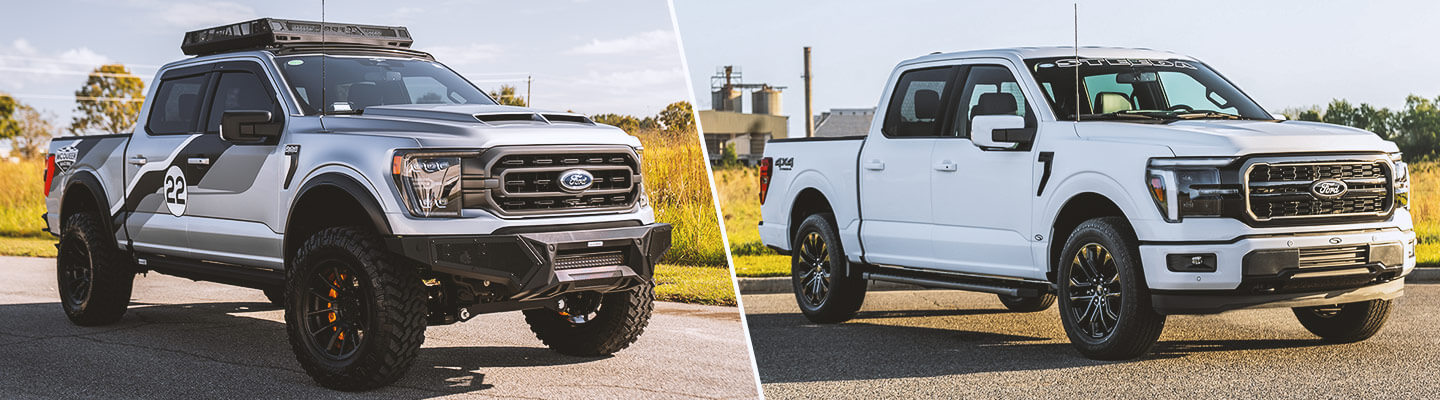
Raising your truck's stance is one of the most popular modifications in the F-150 community. The two primary ways to do it are leveling kits and lift kits. Both add height, but they serve very different purposes and come at very different price points
Understanding those differences will help you avoid overspending on features you don't need or underspending on a kit that won't deliver what you want.
Features and Benefits of Leveling Kits
A leveling kit raises the front of your F-150 to match the height of the rear. Most trucks leave the factory with a slight "nose-down" rake. This forward tilt is intentional. It prevents the rear from sagging under heavy payloads or towing weight.
A leveling kit corrects that rake by lifting the front end between 1.75 and 2.5 inches. The result is a balanced, even stance from front to rear.
Why F-150 owners choose leveling kits:
- Affordable entry point. Most leveling kits cost between $100 and $250, making them one of the cheapest suspension modifications available.
- Simple installation. Many experienced DIYers can install a leveling kit in a home garage with basic tools. Professional installation is typically quick and inexpensive.
- Larger tire fitment. A leveled front end can create enough clearance for 33- to 35-inch tires without major fender trimming.
- Preserved ride quality. Because leveling kits work with the factory suspension rather than replacing it, your daily driving comfort stays mostly unchanged.
- Front-end load compensation. If you run a winch, a heavy bumper, or a snowplow, a leveling kit helps offset that added front-end weight.
Where leveling kits fall short:
Leveling kits are not designed for aggressive off-roading. The ground clearance gain is modest, just enough to level the truck, not enough to clear large rocks or deep ruts. If you need serious height or extreme trail capability, a leveling kit alone will not get you there.
Additionally, leveling kits only address the front of the truck. The rear suspension stays at factory height, so the overall lift is limited to whatever the factory rear height allows.
Ready to Level Your F-150?
Browse Steeda's full lineup of F-150 leveling kits — engineered for a perfect fit and a clean, balanced stance.
Shop Leveling KitsFeatures and Benefits of Lift Kits
A lift kit takes a fundamentally different approach. Instead of leveling the truck, a lift kit raises the entire vehicle off the ground. Depending on the kit, you can add anywhere from 2 to 10 inches of height through modified or completely replaced suspension components.
This is the go-to modification for serious off-road enthusiasts and show truck builders alike.
Why F-150 owners choose lift kits:
- Maximum ground clearance. A quality lift kit puts significant space between your undercarriage and the terrain below, protecting vital components like differentials, transfer cases, and exhaust systems from trail damage.
- Oversized tire capability. Lift kits open the door to 35- to 40-inch tires, which dramatically improve traction in mud, sand, snow, and loose gravel.
- Superior off-road performance. More clearance and bigger tires mean you can tackle deeper water crossings, steeper inclines, and rougher terrain with confidence.
- Commanding presence. There is no denying the visual impact. A lifted F-150 stands out in any parking lot.
Where lift kits demand caution:
Lift kits are a significant investment. A quality kit typically costs between $1,000 and $4,000, and that does not always include labor. Professional installation is strongly recommended because most lift kits require new springs, shocks, control arms, and sometimes driveline modifications.
Fuel economy takes a hit as well. Larger tires are heavier and create more rolling resistance. The taller stance pushes more surface area into the wind. Together, these factors can cause a drop in fuel economy compared to stock.
Finally, a raised center of gravity changes the way your truck handles. High-speed stability decreases, and body roll increases, especially in crosswinds and sharp turns. These are manageable trade-offs for most drivers, but they are worth understanding before you commit.
Suspension Lifts vs. Drop-Bracket Lift Kits
Not all lift kits work the same way. Within the lift kit category, there are two main approaches: suspension lifts and drop bracket lifts. Each one achieves height differently, and the right choice depends on how you plan to use your truck.
Suspension Lift Kits
Suspension lift kits modify or replace key components like control arms, shocks, and springs. The goal is to physically reposition the suspension higher while maintaining or improving wheel travel. Suspension lifts are the preferred choice for technical off-roading and rock crawling because they offer better ride quality and allow the suspension to flex more freely over uneven terrain.
Drop-Bracket Lift Kits
Drop bracket lift kits, sometimes called subframe drop kits, lower the mounting points where the suspension connects to the frame. This maintains factory suspension geometry at a higher ride height, which works well for larger lifts of 4 inches and above.
However, some drop bracket kits require permanent cutting or welding to the subframe. This can reduce structural integrity and negatively affect resale value. They may also reduce effective ground clearance under the frame even though the body sits higher.
For F-150 owners who plan to hit trails regularly, a suspension lift kit offers the best combination of performance and long-term value. Drop bracket kits make more sense for drivers who want significant height primarily for appearance.
Lowering Kits vs. Drop Kits for a Sleek F-150 Stance
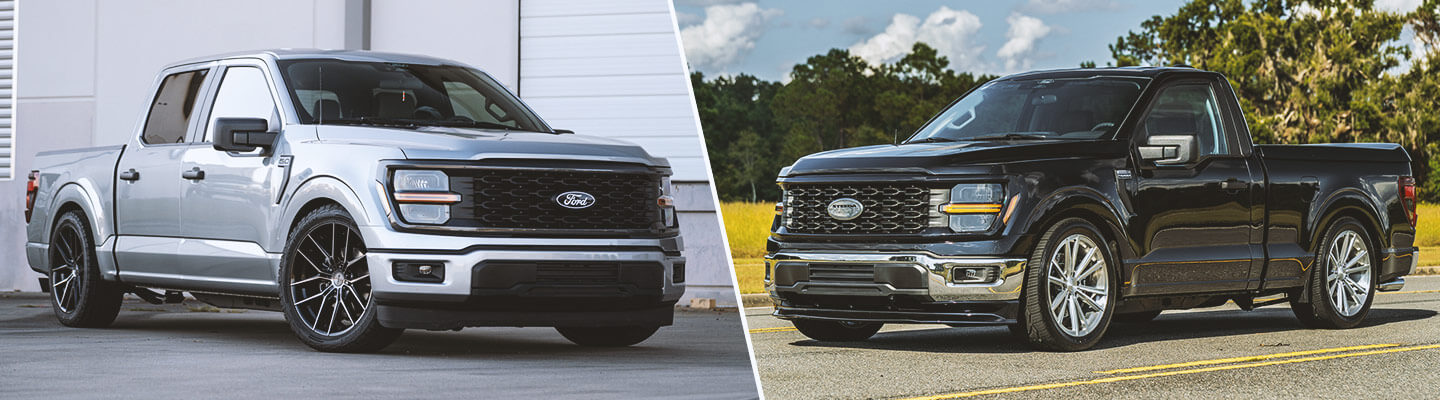
Now let's shift to the other end of the spectrum. While some F-150 owners want to go higher, others want to go lower. Lowering kits and drop kits both bring your truck closer to the ground, but they do it for different reasons and with different results.
Performance Advantages of Lowering Kits
A lowering kit reduces your F-150's ride height evenly across the entire vehicle. It typically replaces the factory springs, shocks, and struts with shorter, stiffer components designed to bring the body closer to the ground.
This is a performance-focused modification. Lowering your truck changes its center of gravity, its aerodynamic profile, and the way it handles corners. The result is a truck that feels more planted and responsive on paved surfaces. For a deeper dive into getting the most out of your F-150's handling, check out our Ultimate F-150 Handling Guide.
What's in a Lowering Kit?
Most lowering kits include a combination of shorter coil springs or lowering spindles for the front and lowered leaf springs, flip kits, or hangers for the rear. Higher-end kits bundle performance shocks and struts that are valved specifically for the reduced ride height. This matters because pairing stock shocks with lowered springs creates a mismatch that hurts ride quality and accelerates component wear.
Some kits also include adjustable components that let you fine-tune the drop height. This is useful if you want to start with a mild 2-inch drop and go lower later without buying entirely new parts.
Performance Benefits of Lowering Your F-150
- Improved stability. A lower center of gravity reduces body roll and lowers the risk of rollover during aggressive driving or emergency maneuvers. The difference is especially noticeable during highway lane changes and freeway on-ramp sweeps.
- Sharper cornering. With less suspension travel and stiffer springs, a lowered truck responds more quickly to steering inputs and holds tighter lines through turns. Steering feedback feels more direct because there is less body movement between the driver and the tires.
- Better aerodynamics. Reducing the gap between the body and the ground decreases wind drag underneath the truck. At highway speeds, this can translate to modest fuel efficiency gains. Over thousands of miles, that small improvement adds up.
- Improved braking performance. A lower stance shifts weight transfer dynamics during hard braking. The reduced nose dive keeps weight distributed more evenly across all four tires, which can shorten stopping distances slightly compared to stock height.
- Street-level presence. A lowered F-150 looks purposeful and aggressive on the road. It sits flush with the wheel wells and creates a muscular, planted appearance that stock trucks simply cannot match.
How lowering affects real-world driving
On smooth highways and well-maintained city streets, a lowered F-150 feels like a different vehicle. The truck hugs the road with more confidence, and crosswinds have less effect on the taller body panels because the overall profile sits lower in the air stream. Passengers often notice the difference immediately, the truck feels more like a performance sedan than a traditional pickup.
That said, the stiffer springs that come with most lowering kits do transmit more road imperfections into the cabin. Rough pavement, expansion joints, and railroad crossings feel sharper than they would on a stock suspension. This is the trade-off for improved handling. Drivers who prioritize a smooth ride over cornering precision should consider a mild drop of 1 to 2 inches with quality shocks rather than an aggressive setup.
Drawbacks to consider
Lowering your truck reduces ground clearance significantly. Speed bumps, steep driveways, and uneven roads become potential hazards. Bottoming out is a real risk if the drop is aggressive.
Suspension geometry changes can also cause uneven tire wear over time. Regular alignment checks become essential after a lowering modification. In some cases, exhaust systems, brake lines, and sway bar links may need adjustment to prevent interference with lowered components.
Drop Kits: Turning Heads, Not Wheels
A drop kit is closely related to a lowering kit, but the emphasis shifts from performance to appearance. Drop kits modify the suspension to achieve a specific low stance, often an uneven one, where the front sits lower than the rear. This creates an aggressive, forward-leaning look popular in the custom truck community.
Common Drop Kit Configurations
Drop kits are typically described using two numbers that represent the front and rear drop in inches. Here are the most common setups:
- 2/4 drop: A mild drop with 2 inches in front and 4 inches in the rear. This is a subtle change that keeps the truck functional for daily driving.
- 3/5 drop: A moderate drop that starts to create a noticeable visual change. The truck sits significantly lower but still maintains reasonable ground clearance.
- 4/6 drop: An aggressive setup that dramatically changes the truck's profile. The rear sits much lower, and this is the drop that people use for drag racing.
- 5/7 drop: An extreme configuration reserved for dedicated show trucks. At this level, daily drivability is significantly compromised in exchange for a jaw-dropping visual impact.
What to watch out for with drop kits
Drop kits prioritize looks over function. Drivers should expect a rougher ride compared to stock, especially on imperfect road surfaces. The reduced ground clearance limits where you can safely drive. Suspension components experience increased wear because they operate outside their designed range of motion.
Professional installation is critical with drop kits. Incorrect installation can lead to unsafe handling, accelerated component failure, and alignment issues that chew through tires quickly.
At-a-Glance Comparison: All Four Kit Types
Use this table to quickly compare the key characteristics of each suspension modification.
| Kit Type | Height Change | Best For | Install Difficulty |
|---|---|---|---|
| Leveling Kit | Front +1.75"–2.5" | Daily drivers, tow rigs, front accessories | DIY-friendly |
| Lift Kit | +2"–10" all around | Off-roading, trail use, show trucks | Professional recommended |
| Lowering Kit | –1"–3" all around | Street performance, highway driving | Professional recommended |
| Drop Kit | –2/4 to –5/7 (front/rear) | Custom/show trucks, drag racing | Professional required |
Which Kit Is Right for Your F-150?

With all four options on the table, how do you decide which one is right for your F-150? The answer comes down to how you use your truck and what matters most to you.
Choose a Leveling Kit if…
You drive your F-150 daily and want a balanced stance without a major investment. Leveling kits are ideal for tow rigs, daily commuters, and light utility trucks. They give you room for moderately larger tires and correct the factory rake without changing the way your truck drives. They also compensate for front-end accessories like winches.
Choose a Lift Kit if…
You take your F-150 off-road regularly through deep mud, rocky trails, or standing water. A lift kit gives you the ground clearance and tire size needed to handle serious terrain. Lift kits are also the right call for high-profile show trucks. Just be prepared for the higher cost, fuel economy trade-off, and handling changes that come with a taller ride height.
Choose a Lowering Kit if…
Your priorities are handling, stability, and on-road performance. A lowering kit transforms the way your F-150 corners and responds at speed. If you spend most of your time on highways, city streets, and winding roads, the lower center of gravity will make a noticeable difference.
Choose a Drop Kit if…
Your primary goal is appearance. The aggressive stance, especially in more extreme configurations like 4/6 or 5/7 drops, makes a statement no other modification can match. Keep in mind that extreme drops compromise daily drivability. If the truck is a dedicated show vehicle, a drop kit delivers exactly what it promises. If it is your daily driver on rough roads, think carefully about how low you want to go.
Frequently Asked Questions
Yes, but the impact varies dramatically between the two.
A large lift kit paired with oversized tires creates significant aerodynamic drag and rolling resistance.
A leveling kit has minimal impact on fuel economy. It only raises the front by a couple of inches and does not require heavier tires. In some cases, correcting the factory rake can slightly reduce front-end drag, though the improvement is too small for most drivers to notice.
Not inherently, but the risk depends on installation quality and driving conditions.
A properly installed lowering kit or drop kit should not damage your suspension when used on appropriate road surfaces. Potential issues include accelerated wear on bushings and ball joints, uneven tire wear from altered alignment angles, and the risk of bottoming out. These risks increase as the drop becomes more aggressive.
The most important step you can take is having the kit installed by a qualified professional, including a full alignment and verification that no components interfere during full suspension travel.
A leveling kit is significantly less expensive in every category. Parts run between $100 and $250, and professional installation adds another $100 to $300. The entire project can often be completed in a single afternoon.
A lift kit is a much larger commitment. Parts alone cost between $1,000 and $4,000 depending on brand, lift height, and included components, plus $500 to $1,500 for professional installation.
Beyond the initial cost, lift kits may require additional modifications down the road: driveline vibrations, bumper clearance issues, and lighting adjustments are common follow-up expenses. A leveling kit rarely requires any additional work after installation.
Yes. A leveling kit pairs well with aftermarket wheels, moderately larger tires, fender flares, and upgraded shocks. If you decide you want more height later, it is generally best to remove the leveling kit and install a complete lift system.
Under the Magnuson-Moss Warranty Act, a dealer cannot void your entire warranty simply because you installed aftermarket parts. However, if a warranty claim is related to a component affected by the modification, the dealer can deny that specific claim. Using quality, reputable parts minimizes this risk considerably.
Choosing the right suspension modification comes down to matching the kit to how you actually use your truck. Leveling kits and lift kits add height and clearance — leveling kits for a budget-friendly balanced stance, lift kits for extreme clearance on serious trails. Lowering kits and drop kits bring your truck closer to the ground — lowering kits for handling improvements, drop kits for visual impact.
No matter which direction you go, assess your driving habits, set a realistic budget, and consult with a professional suspension shop before committing. The right kit, installed correctly, will transform your F-150 into exactly the truck you want.
Ready to Transform Your F-150?
Browse Steeda's full inventory of F-150 suspension kits or contact our team for expert recommendations tailored to your truck and your goals.
Shop F-150 Suspension at Steeda