The Ford F-150 is the undisputed king of the American road, built to haul, tow, and conquer off-road
trails. After all, it is America’s best-selling truck for nearly a half-century because of its
incredible engineering. However, because it is designed to satisfy a massive range of users, the factory
suspension is often a compromise, or a sweet spot, between different use cases. If you have ever felt
that "boaty" sensation while taking a highway off-ramp or experienced "rear-end jitter" over a set of
railroad tracks, you’ve felt those compromises firsthand.
At Steeda, we believe a truck should handle with precision without sacrificing its utility. This guide
explores the best F-150 handling mods and F-150 suspension upgrades to transform your driving
experience.
The Problem: Why Your Stock F-150 Feels "Floaty"
Most factory F-150s are tuned for soft, linear comfort. While this feels great for the standard daily
driver, it introduces some performance issues for those who want a more performant truck:
- Excessive Body Roll: The high center of gravity causes the truck to lean
significantly during
cornering.
- Rear-End Jitter: An empty truck bed often feels unsettled or "jumpy" over bumps
because the leaf
springs are designed for maximum load, not empty-bed damping.
- Brake Dive & Squat: Hard braking causes the nose to dip, while heavy acceleration
or towing causes
the rear to sag, reducing steering control.
By strategically improving F-150 ride quality, you aren't just making the truck "stiffer", you are making
it more predictable and safer.
F-150 Sway Bars
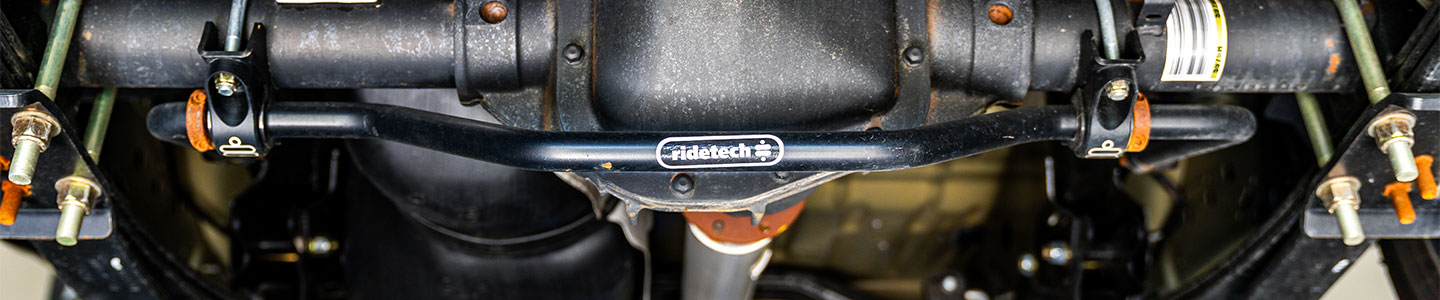
If you only make one change to your truck’s handling, it should be the sway bars. A sway bar, or
anti-roll bar, connects the opposite wheels of an axle to reduce the lean during turns.
F-150 Sway Bar Benefits
A sway bar is essentially a torsion spring. It connects the left and right sides of the suspension. When
the truck leans, the bar is twisted, and it resists that twist by trying to pull the body back level.
- Front Sway Bars: Most F-150s come with a front bar, but it is often thin-walled and
designed for a soft ride. Upgrading to a heavy-duty front bar increases the roll stiffness,
making the truck feel much more "planted" in the steering wheel.
- Rear Sway Bars (The Missing Link): Most F-150s (except for specific packages like
the Max Trailer Tow on certain years) lack a rear sway bar entirely. Without a rear bar, the front
end does all the work, leading to massive understeer. Adding a rear bar balances the truck, allowing
flatter cornering.
F-150 Adjustable Sway Bars
Steeda
Adjustable Sway Bars allows you to "dial in" the handling. If you find the truck is too "pointy"
or oversteers, you can soften the rear bar. If it still feels sluggish, you can stiffen it. This level
of customization is what separates a generic "parts bin" truck from a performance-tuned machine.
F-150 Performance Shocks & Struts
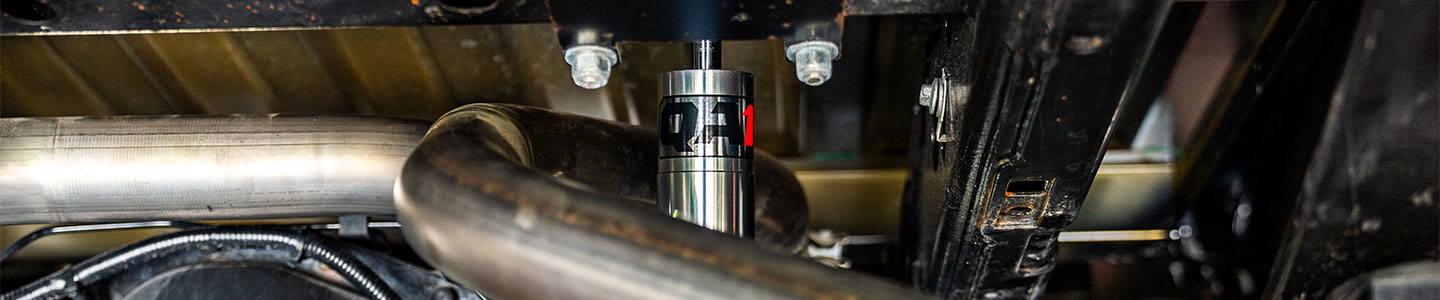
Upgrading your shocks and struts is essential for improving your F-150's ride quality. Shocks are
typically a standalone damper, found at the rear of your F-150, and are designed to control the rebound
movement of your vehicle. Your struts are usually found at the front of your F-150. They are suspension
components that combine a damper and a coil spring to support the weight, control rebound movement, and
reduce body roll during turns.
Twin-Tube vs. Monotube
- Twin-Tube: This design features an inner "working" cylinder and an outer "reserve"
cylinder. The
piston moves inside the inner tube, while the area between the two tubes acts as a reservoir for oil
and a low-pressure gas charge. The result of this design is a smooth ride that, with the right
tuning, can provide the ultimate experience in performance and drivability.
- Monotube: This design utilizes a single cylinder that houses the piston, oil, and a
high-pressure
gas charge. A floating divider piston separates the oil from the gas within that single chamber to
keep the internal fluids under constant pressure.
Use-Cases: Which Design Fits Your Build?
| Application |
Best Style |
Key Benefit |
| Daily Commuter |
Twin-Tube |
Maximum comfort and ride quality |
| Towing & Hauling |
Monotube |
Eliminates "rear-end bounce" and maintains stability under load |
| Off-Road / Trails |
Monotube/Adjustable |
Prevents shock fade during rapid suspension cycling on rough terrain |
| Street Performance |
Adjustable |
Allows you to dial-in firmness for your specific application |
F-150 Lowering Kits
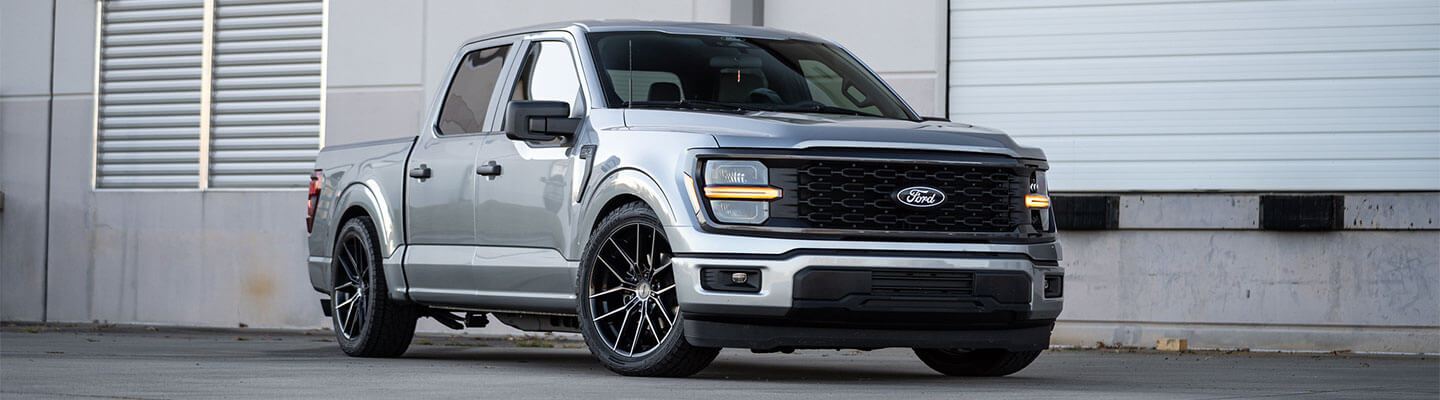
Lowering an F-150 is about more than just a "low-profile" aesthetic. Bringing the chassis closer to the
asphalt significantly lowers the center of gravity, which minimizes body roll and improves high-speed
stability. However, achieving the perfect stance requires choosing the right hardware to maintain proper
suspension geometry. You can read more about lowering methods in our complete lift vs lowering kit guide.
Common Lowering Methods
Depending on your goals for ride height and performance, there are several ways to drop an F-150:
- Drop Spindles: These replace the factory front spindles. They move the wheel mounting point higher
up on the spindle, effectively lowering the truck's body without changing the factory strut’s travel
or spring rate. This is widely considered the best way to lower the front while maintaining a
factory ride.
- Lowering Springs: A direct replacement for factory coils, these springs feature a shorter free
height and usually a stiffer spring rate. They are an entry-level way to achieve a 1-inch to 2-inch
drop while increasing cornering stiffness.
- Coilover Kits: For the ultimate street setup, coilovers provide a threaded shock body that allows
for precise height adjustments. These kits often include adjustable damping, giving you total
control over how the truck reacts to road imperfections.
- Rear Drop Shackles: An easy bolt-on for the rear leaf springs that typically provides 1 to 2 inches
of drop. This is the most common way to "level" an F-150 by removing the factory rear rake.
- Rear Flip Kits: To achieve a drop of 4 inches or more in the rear, the axle must be "flipped" from
underneath the leaf springs to on top of them. This is the standard method for 3/5 and 4/6 drops.
Comparing Popular Drop Stances
| Stance Type |
Front Drop |
Rear Drop |
Ideal Use-Case |
| Leveling Drop |
0" |
2" |
Removing the factory rake for a flat, uniform look |
| 2/4 Drop |
2" |
4" |
The "Daily Street" look. Greatly improved handling without sacrificing ground clearance
|
| 3/5 Drop |
3" |
5" |
An aggressive street stance that usually requires a Flip Kit |
Technical Consideration: Suspension Geometry
Lowering a truck changes the angle of your control arms and driveshaft. When going lower than 2 inches,
it is vital to utilize Alignment Camber Bolts and potentially a Driveshaft Shim Kit to prevent
vibrations and ensure your tires wear evenly. At Steeda, we recommend always pairing a significant drop
with upgraded shocks to prevent "bottoming out" the suspension on the shortened travel.
2015–2020 Ford F-150 vs. 2021+ Ford F-150
The F-150 platform underwent several changes in 2015 with the move to an all-aluminum body. While the new
body construction shed nearly 700 pounds of weight, there is still room for improvement in its
suspension.
The 2015–2020 Chassis (Gen 13)
These trucks are lighter than their predecessors, which makes them feel more nimble but also more prone
to feeling "floaty" at high speeds. Upgrading the rear shocks on these models is almost mandatory, as
the factory dampers were often criticized for being under-tuned for the lighter aluminum bed.
The 2021+ Chassis (Gen 14)
Ford improved the track width and revised the spring rates for the 14th generation. However, they also
introduced more complex electronic steering systems. For these trucks, F-150 suspension upgrades need to
focus on maintaining the factory electronic tolerances. Using high-quality upper control arms is vital
here to ensure that the lane-keep assist and steering sensors aren't fighting the new geometry.
Which F-150 Suspension Mods Are Right For You?
Use the table below to determine which F-150 suspension upgrades fit your specific driving style.
| Driver Type |
Primary Goal |
Recommended Upgrades |
| The Daily Commuter |
Comfort & Confidence |
Rear Sway Bar, Leveling or Lowering Kit, Upgraded Rear Shocks |
| The Heavy Hauler |
Towing Stability |
Rear Sway Bar, Helper Springs, HD Brake Pads, Shocks/Struts, HD Leaf Springs |
| The Weekend Warrior |
Off-Road & Performance |
Adjustable UCAs, Upgraded Shocks/Struts |
| The Street Sport |
Maximum Handling |
Front & Rear Sway Bars, Lowering/Axle Flip Kit, Performance Bushings, Traction Bar
|
The Steeda Difference: Engineering & Real-World Testing
Why choose Steeda for your F-150 handling mods? Unlike companies that simply "rebrand" generic parts,
Steeda components are engineered in-house.
Made in the USA: Valdosta, GA
We take immense pride in our American heritage. Our primary manufacturing and engineering hub is located
in Valdosta, Georgia. By keeping our manufacturing domestic, we maintain total oversight of the supply
chain. This ensures that the steel used in our F-150 sway bars is of the highest quality and that our
welding and powder-coating processes meet our internal standards.
The "Track-Tested/Street-Tested" Philosophy
Steeda's roots are in competitive racing, and we apply that same "win on Sunday, sell on Monday"
mentality to the F-150. Before any suspension component reaches a customer’s truck, it undergoes
rigorous real-world testing.
Installation Tips & Maintenance
Most of these F-150 suspension upgrades are bolt-on and can be completed in a home garage with standard
tools. However, keep these three tips in mind:
- Alignment is Mandatory: Anytime you change the ride height or control arms, get a
professional alignment immediately.
- Torque to Spec: Truck suspensions are under immense tension. Always use a torque
wrench and follow the manufacturer’s specifications.
- Check Your Bushings: Periodically grease any aftermarket polyurethane bushings to
prevent squeaking and ensure a long service life.
Frequently Asked Questions
Why does my F-150 sit higher in the back than the front?
This is known as "Factory Rake." Ford designs the F-150 with the rear approximately 2 to 3 inches higher
than the front to account for payload and towing. When you place a heavy load in the bed or hitch up a
trailer, the rear suspension compresses, bringing the truck level. If the truck were level from the
factory, it would "squat" dangerously under load, pointing your headlights upward and reducing
front-tire traction.
What is the difference between a leveling kit and a lift kit?
A leveling kit typically raises only the front of the truck (usually by 1.5 to 2.5 inches) to match the
height of the rear, removing the factory rake. A lift kit raises both the front and rear of the vehicle,
usually by 3 to 6 inches or more, to provide maximum ground clearance for large off-road tires. Leveling
kits are generally more affordable and easier to install, while lift kits require more extensive
modifications to the suspension geometry.
Will a leveling kit ruin my F-150’s ride quality?
If you use a spacer leveling kit, the ride quality remains similar to stock because you are using the
factory springs and shocks. However, spacers can sometimes lead to a "pre-loaded" feel or harsher
bottoming out. For the best ride quality, we recommend a Coilover Leveling Kit, which replaces the
entire front strut with a performance-tuned unit designed for the new height.
Do I need an alignment after installing suspension mods?
Yes. Any time you change the ride height of your F-150, whether lowering it or leveling it, your
front-end geometry changes. Failing to get an alignment will result in "toe-out" or "camber" issues
Videos
Take your F-150 to the Next Level
Upgrading your suspension is about more than just "racing," it is about making your truck work better for
you. Whether you want to eliminate F-150 body roll on your favorite backroad or want a more stable
platform for your camper, the right combination of sway bars, shocks, and geometry corrections will make
your F-150 feel like a completely different vehicle.
Ready to transform your F-150’s handling? Shop F-150
suspension upgrades at Steeda!