Part one of our series on Steeda's race Focus: reviving the Cosworth-powered ZX3
after years parked and taking it to its first two autocross events. Steeda Autosports built its reputation on motorsports wins and making high-performance Ford parts. In the
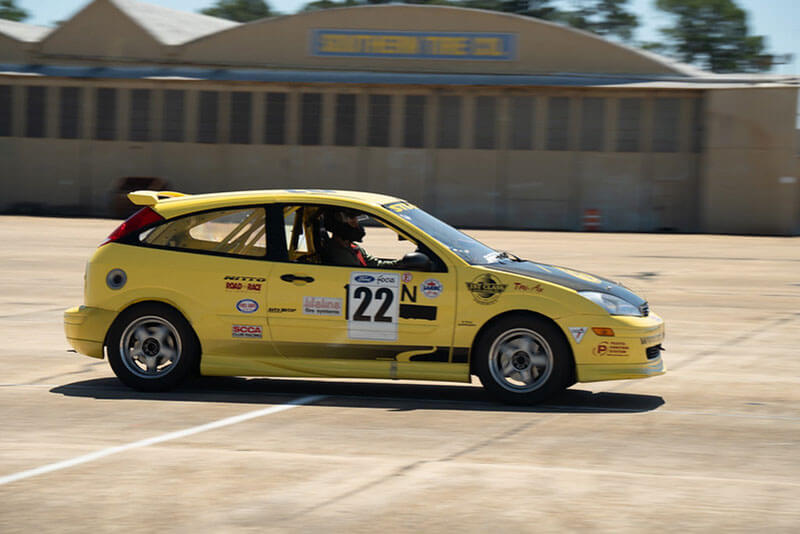
early 2000s, that meant a yellow Focus ZX3, driven by Steeda president Dario Orlando and chief engineer
Steve Chichisola. The car raced SCCA events across Florida, led the 2002 Citrus Enduro at Homestead, and
by 2006, Dario qualified it third out of 60 cars at Moroso Motorsports Park, behind only purpose-built
race cars. Back then, it had a 2.0-liter Zetec engine with about 200 naturally aspirated horsepower, and
every part was something Steeda was testing to sell. Then it all stopped. The car sat in the showroom for years, gathering dust. That bothered us, so we
decided to bring it back to life. The goal was simple: get the Focus running, pass tech, and see what it
could do at an autocross. We also hoped to try it on a road course later. Here’s how we brought the car back to life, took it racing, and how Luke Robinson and Riley McDowell did
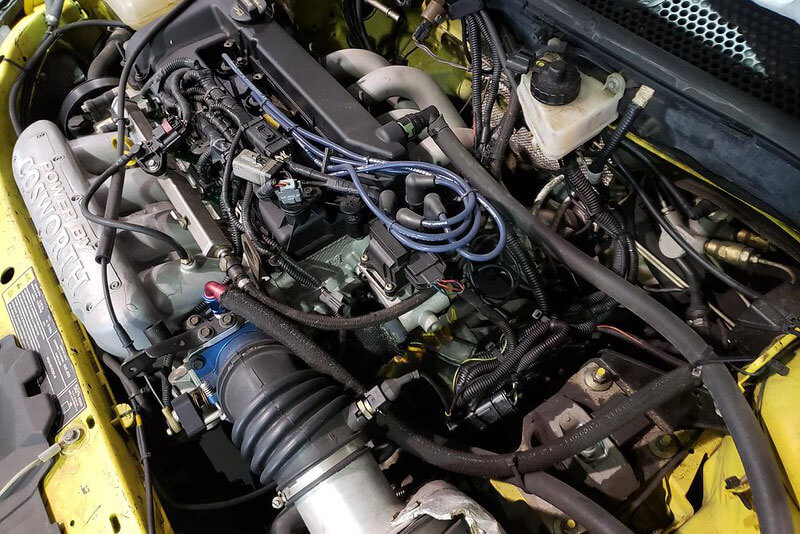
while sharing one seat over the course of the event. Today, the car is a manual ZX3 with a Cosworth engine, a Pectel T2 ECU, and a fuel cell instead of the
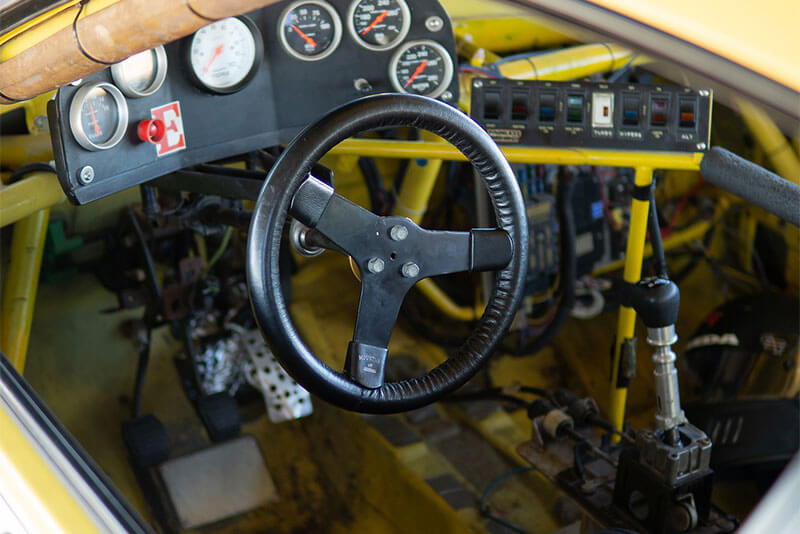
original tank. It runs on 93 octane, is naturally aspirated, and revs up to 9,000 rpm. Inside, the car has no interior and a roll cage where the back seat used to be. This is a true
competition car, so bringing it back meant checking every detail and not taking anything for granted.
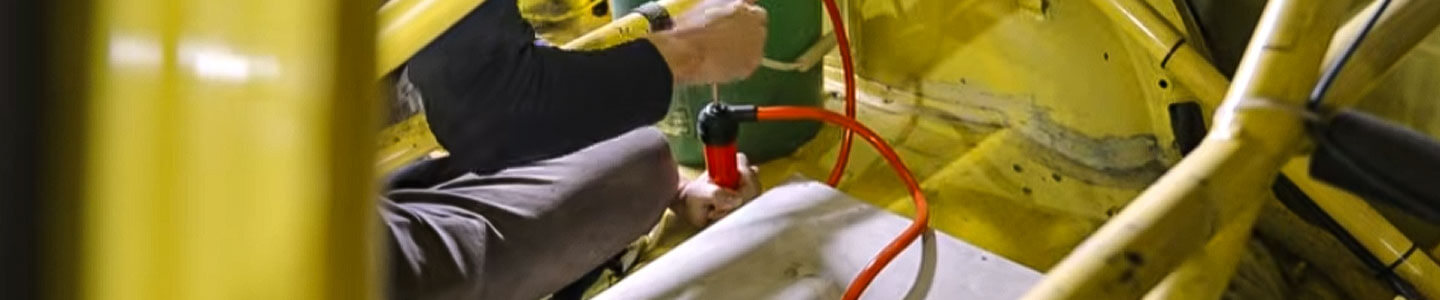
The fuel cell made the first job simple. Draining old gas is much easier without a factory tank in the
way. We took off the lid and checked the foam inside, which keeps fuel from sloshing and blocks debris
from the filter. We expected it to be ruined, but it was fine, so we put it back and added a gallon of
fresh 93. The car still wouldn’t start, and the fuel pump was the problem. We knew there was a bad ground, but not
which one. Damion, our tech, checked everything step by step: 12 volts at the pump, ground looked good,
but nothing happened. That meant the fuel pump module was dead. Since we didn’t have a spare, we wired
the pump directly to the power to see if the engine would run. It started right up. When the new module arrived and was installed, the problem was fixed, and the Cosworth idled smoothly.
The first real drive revealed that the brakes hardly worked. We began by flushing and bleeding the entire
system until the fluid was clean. Next, we installed and bedded in Hawk Blue pads, which are made for
the quick, aggressive stops needed in autocross. After fixing the brakes, we put the car on the lift and found more issues. The bump stops were falling
apart, so we rebuilt them on the dampers using urethane stops from our Mustang, cut to fit. These
tougher stops help withstand track use. We also discovered the helper springs were cracked and had been tack-welded, so we replaced them with a
good set from another project. Next, we changed the oil with fresh Mobil 1, as it was long overdue, and
filled the gearbox with Royal Purple. After cleaning out a gummed-up overflow tank, we drained and
refilled the cooling system with Redline. The shifter felt sticky and rough, but some spacing and grease
at the base resolved this, allowing it to shift smoothly. With maintenance done, we focused on the intake. We started with cardboard templates and then used scrap
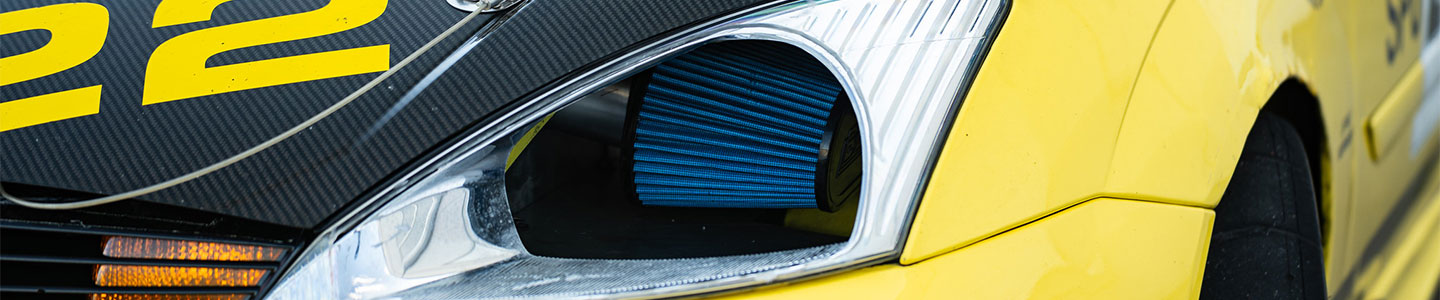
sheet metal to build a better airbox. At some point in the past, a slit was cut into the driver 's-side
headlight cover to allow more air to flow into the intake. We decided that this was now inadequate and
finished removing the rest of the cover to allow as much air as possible to get to the intake. With a complete airbox, we can keep hot engine-bay air out and pull in cooler outside air. This should
cool the engine, especially on hot track days. The new tires we grabbed from the warehouse were wider and had taller sidewalls than the old ones, and
after a few test drives, we noticed they were rubbing the fenders. We raised the front ride height for
more clearance and put the car on the alignment rack. That’s when we found the best surprise of the
project: the original alignment sheets from the car’s Steeda race days were still on file. Instead of
guessing, we set the alignment back to those proven race numbers for the weekend. During testing, the steering felt loose. Tightening a single bolt at the steering shaft/rack connection
made a big difference. A misfire showed up on a shakedown and was traced back to a spark plug wire snapped clean in half, with
the boot missing entirely. A fresh set of wires sorted it out, and we kept the better-fitting boots from
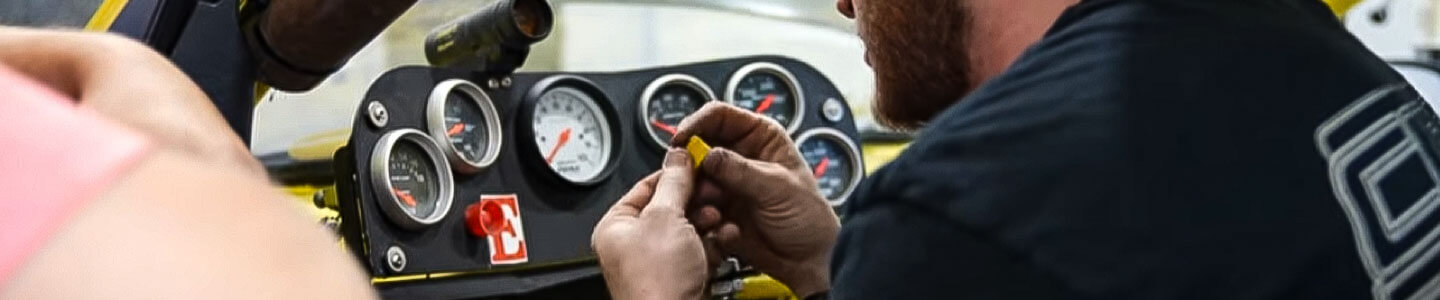
the old set rather than tossing them. The next issue was the AutoMeter Pro shift light. At first, we suspected a bad resistor. After further
testing and help from AutoMeter, we realized it was user error; the shift light was set to trigger near
redline. So, we needed to treat it like a racecar and stop babying it. Before trailering, we installed a new serpentine belt for reliability. With that done, we loaded the
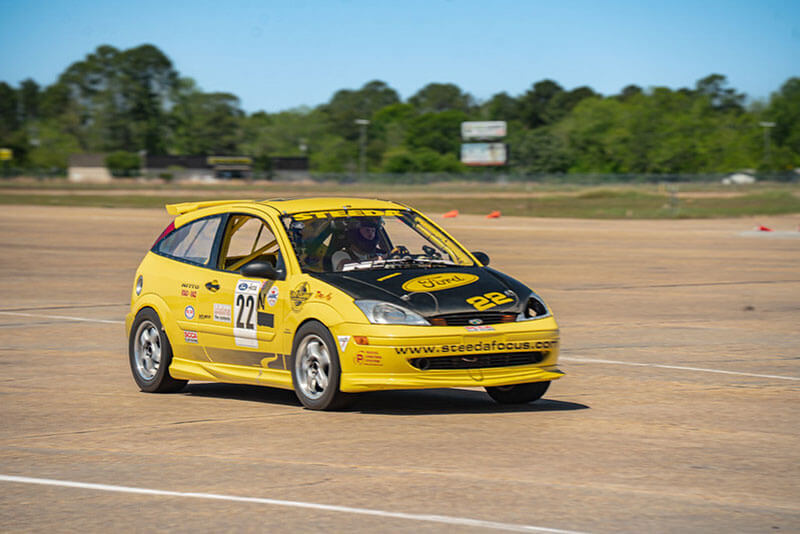
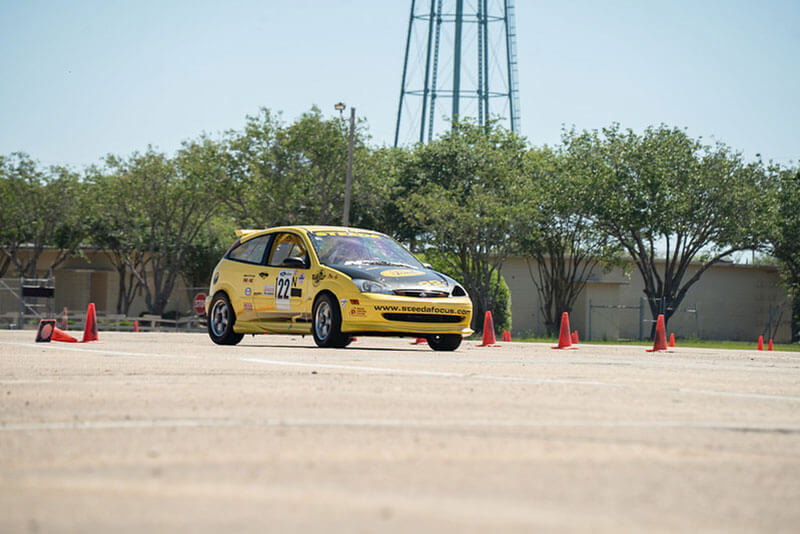
Focus and headed out to race. The Steeda Race Focus’s first event back was with the Red Hills Region SCCA at Spence Field in Moultrie,
Georgia, and tech inspection was a learning experience. The car passed tech easily, but Luke and Riley
had trouble with their helmets. The autocross tech required a motorsport-rated helmet, not a DOT
motorcycle helmet, so they had to share the only approved one. Figuring out the right class was the real challenge as well. With a cage, no interior, and an engine
swap, the Focus clearly belonged in Prepared, but the SCCA’s online tool only covers Focus models from
2012 onward, and this car is older. After checking the rulebook, we settled on E Prepared, and the
numbers matched. At the event, EP was confirmed, but since Luke and Riley were the only ones in that
class, tech put the car in Novice for the day so they’d have real competition. Having only one seat affected the whole day. Luke and Riley took turns driving, with Luke going first,
then Riley, and so on. Since there was just one seat, they couldn’t ride along to coach each other or
get extra laps as passengers. Like everyone else, they walked the course before the first run to memorize it. Both drivers started with times in the high 50s and improved from there. Luke finished with a 50.632.
Riley said he pushed hard early, trying to catch Luke’s time before he really knew the course. He
started at around 58 seconds and dropped to 51.884, improving by about 7 seconds. Riley also got an
extra run when another car’s incident caused a rerun. Front-wheel-drive cars usually understeer, but this setup let the rear slide out on corner entry, which
surprised Riley. He was used to rear-wheel-drive cars, so his instinct was to hit the brakes, but that
just made the back end swing out more. The solution was the opposite: add throttle to settle the car,
then lightly tap the front brakes to lower the nose and load the front tires. On a long, wide turn at
the back of the course, they found they could use the throttle to rotate the car, then tap the brakes at
the exit cone to help the front tires grip and speed out. Another racer watching from the fence noticed what the drivers already felt: the tires were folding over
onto their sidewalls. Along with the car moving around under them, this meant it was time to adjust tire
pressures (they started at a soft 25 psi) and do some real suspension tuning.
Both events used PAX, or index time, which is a handicap system that lets cars with very different
abilities compete on the same scale. Once a Steeda SCCA racer and later left sitting, this car now starts easily, passes tech, and runs hard.
The Cosworth revs to 9,000 rpm, the steering is tight, and the custom airbox keeps it cool. Most
importantly, the autocross weekend helped both amateur drivers learn car setup and get seat time. Our future plans include refining the suspension and tire pressures, weighing the Focus, adding a second
seat to accommodate a second driver, and performing running dyno pulls. We are excited to continue this
build and see what the future holds. Stay Tuned for Updates
Reviving the Steeda Race Focus, Part 1: From Storage to the Autocross Grid
How The Focus Is Now
Bringing The Focus Back to Life
The Fuel System Goes First
Brakes, Fluids, and a Lift Full of Tired Parts
A Hand-Built Airbox
Bigger Tires, More Ride Height, and a Lucky Find
Steering Issues, a Misfire, and a Shift Light That Wouldn’t Behave
Running Autocross with The Steeda Focus
Getting The Car Through Tech
Two Drivers, One Seat
What the Focus Taught Them Throughout The Weekend
The Times
Event 1 — Red Hills Region SCCA, run in Novice
Driver
Best Raw
Indexed (PAX)
Result
Luke Robinson
50.632
43.290
3rd, Novice
Riley McDowell
51.884
44.361
4th, Novice
Where Does The Steeda Race Focus Go From Here
Next up for the Focus
Related Articles