Watch our complete guide for upgrading your Mustang's lateral and tension links
Modern S550 and S650 Mustangs use separate lateral and tension links
instead of the old
single lower control arm design from Fox Body days. That split control arm layout is a big reason these
cars track straight, brake hard, and carry real corner speed from the factory. This article walks through what each link does, how to spot wear, and why upgrading to S650-style
aluminum arms and Steeda components is a real performance gain. On S550 and S650 Mustangs, each front corner uses two main links instead of one big stamped arm: Working together, they locate the wheel in 3D space: the tension link controls fore/aft movement and
stability under braking, while the lateral link keeps the tire planted in the corner and resists
side-load deflection. The front tension link bolts to the spindle on one end and the front of the K-member on the other, with
the link angled back toward the rear of the car. That forward pickup and rearward angle do a few
important things: You feel this as a car that tracks straight when you hammer the brakes or hit bumps on the highway,
instead of darting or “hunting” in the lane. On Performance Pack cars, the tension link usually carries a plastic brake cooling duct: That extra airflow helps manage rotor and pad temps on spirited drives and track days. Non-PP cars miss
out on this from the factory, which is why Steeda offers kits that add brake deflectors and upgraded
links to those cars. As S550s age, especially in harsh climates, tension links are becoming a wear item. Common symptoms: If the ball joint at the spindle or the bushing at the K-member is worn, the link can’t hold the wheel
solidly under load, and you’ll feel it at the pedal and in the wheel. The front lateral link is all about side-to-side control. It ties the spindle to the K-member and keeps
the tire pointed correctly as you build lateral Gs in a corner. Its job: Think of it as the part that keeps the car feeling “keyed in” to the road when you turn in hard and pick
up the throttle. When the lateral link bushings or ball joint start to go, you’ll typically notice: S650 front suspension isn’t just a carryover from S550, it’s an evolution of what the Mustang represents.
Key differences in the lateral
and tension links: S650 links use a lightweight aluminum construction while the S550 uses steel. This reduces unsprung
weight, improving ride quality and responsiveness. S650 front tension links are just under 2.5 lb lighter each than S550 pieces. Swapping both tension and
lateral links can cut just under 5 lbs. of unsprung weight from the nose of your Mustang. On the s650, the rear of the lateral link is beefed up and uses and extended ball joint from the factory.
That extended lower ball joint concept is something Steeda has used since the Fox Body days to correct
front roll center. By effectively moving the spindle up relative to the arm, the extended joint raises
the front roll center closer to where it was designed to be, especially on lowered cars When you lower a Mustang, you not only drop the body, you also drop the front roll center toward the
ground. That can make the car roll more unless you crank up spring and bar rates. Extended ball joints
raise the roll center back toward where Ford intended, restoring geometry so your spring and sway bar
tuning actually does its job. Bolting S650 lateral and tension links onto an S550 is more than cosmetic it actually improves handling
and steering feel in several ways:
Less unsprung weight lets the front suspension react quicker over bumps and curbing, which improves grip
and stability when you throw the car into a turn. For S550 and S650 owners running lowering springs or coilovers, Steeda offers an extended replacement
ball joint for the rear (lateral) link. It follows the same philosophy we’ve used since the Fox Body
days: extend the lower ball joint to bring the front roll center back into a proper range and get more
effective camber control under load. Key Benefits: On many factory arms, pressing ball joints in and out multiple times can distort the bore and shorten the
life of both the arm and the joint—especially with steel components going into aluminum. Ford addressed
this on the S650 with a redesigned end that accepts a snap-ring–retained joint, and Steeda’s extended
ball joint takes full advantage of that design for performance and serviceability. From the factory, S650 tension links use a soft rubber bushing tuned for comfort. For drivers who want
maximum precision, Steeda offers a press-in kit that replaces the OE bushing with a large aluminum
housing and Teflon-lined spherical bearing. Expected benefits from this include sharper steering response, more consistent braking feel with less
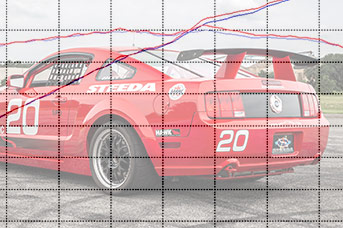
mush, and reduced deflection under load for improved handling precision. These parts have been proven on Steeda’s #20 Mustang over months of track testing at circuits like
Sebring, Daytona, and Homestead, then validated on street-driven S550s. Use this quick checklist to determine if your lateral tension links need attention or an upgrade: If any of that sounds familiar, lateral and tension links are worth a hard look.Mustang Lateral and Tension Links: What They Do and When to Upgrade
What Are Lateral and Tension Links?
Front Tension Links: Straight-Line and Braking Stability
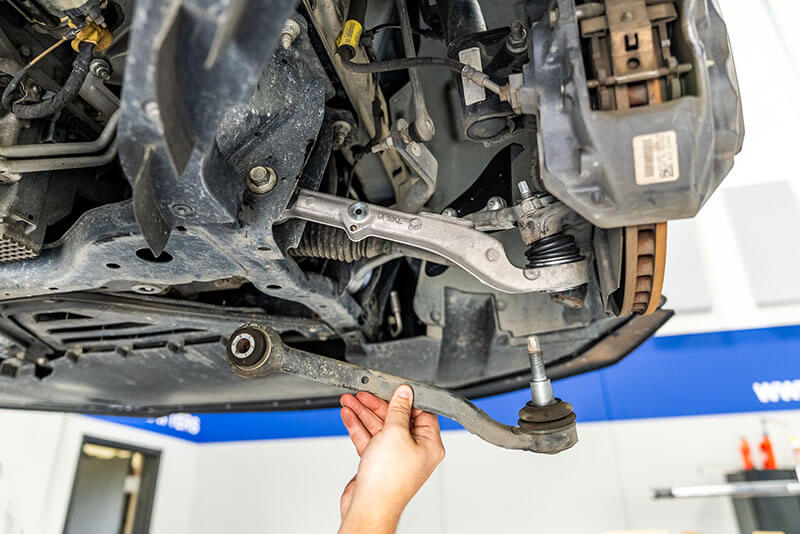
How the tension link controls the wheel
Brake cooling ducts on Performance Pack cars
Signs your tension links are worn
Front Lateral Links: Cornering Grip and Steering Feel
What the lateral link does
Wear symptoms on the lateral link
S550 vs S650 Arms: Material, Geometry, and Weight
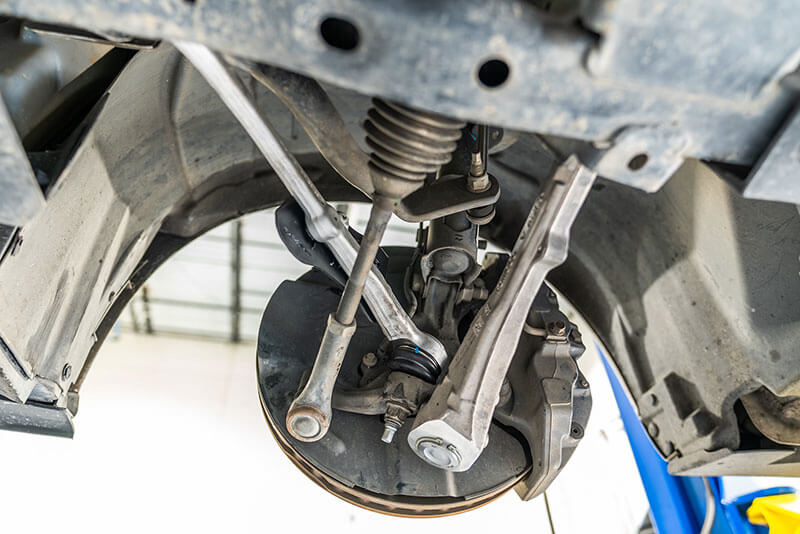
Material
Weight Savings
Geometry/Ball Joints
Why S650 Links Are a Smart Upgrade for S550 Owners
Steeda Upgrade Options: Ball Joints and Spherical Tension Links
Extended Ball Joints for Lowered Cars
Spherical-bearing tension links for ultimate precision
When Should You Consider Replacing or Upgrading?
Ready to upgrade? Shop Mustang front suspension and control arm kits at Steeda and build your setup for the street, track, or both.
SHOP MUSTANG CONTROL ARMS
Related Articles