

Click anywhere to close
Fix Spongy Brakes for Good: Why Stainless Steel Brake Lines Are Worth the Upgrade
If you've ever pressed your brake pedal and felt that soft, mushy engagement, like pushing against a sponge rather than a firm wall, then you already know the frustration of spongy brakes. The good news? It's often one of the easiest problems to fix, and the solution lasts far longer than you might expect.
In this article, we'll break down exactly why your factory rubber brake lines are causing that vague pedal feel, how stainless-steel brake lines solve the problem, what the installation process looks like, and whether this upgrade is right for your driving style.
Watch before you wrench — everything you need to know about stainless steel brake lines.
What Causes a Spongy Brake Pedal?
To understand the fix, you need to understand the problem. Your vehicle's braking system is hydraulic, when you press the pedal, it pushes fluid from the master cylinder through brake lines to the calipers, which then clamp down on the rotors to slow the car.
The flexible sections of your brake system, the hoses that run near each wheel, are made of rubber from the factory. That rubber is essential because it needs to flex as your suspension moves and your wheels turn. But flexibility comes with a tradeoff: rubber expands under pressure and heat.
When you push hard on the brake pedal and pressure spikes inside the line, the rubber hose may balloon slightly outward. That expansion absorbs hydraulic pressure that should be going straight to your calipers. The result is a pedal that feels soft and unresponsive, with a long travel before meaningful braking force kicks in. Over time, as rubber ages and naturally degrades, this problem only gets worse.
How Stainless Steel Brake Lines Solve the Problem
Steeda's stainless steel brake lines replace the factory rubber flexible hoses with a purpose-built, high-performance alternative. Here's what makes them different:
Stainless Steel Brake Line Construction
Each line features a Teflon inner liner that channels brake fluid with excellent chemical resistance, wrapped in a tight braided stainless steel outer mesh. That stainless braid is what does the heavy lifting, it prevents the line from expanding outward under pressure, no matter how hard you brake.
The Performance Difference
Because the line doesn't expand, hydraulic pressure transfers immediately and completely to your calipers the moment you press the pedal. The result is a noticeably firmer, more responsive pedal feel with dramatically less travel before engagement. Drivers consistently describe the before-and-after as moving from a "mushy" pedal to one that feels solid, precise, and confidence-inspiring.
Beyond pedal feel, stainless lines deliver:
- Better braking modulation: You can precisely control how much stopping force you're applying, which is critical for performance driving and emergency situations alike.
- Greater durability: Stainless steel resists heat, UV exposure, and corrosion far better than rubber. While factory rubber hoses typically begin to degrade within six years, a quality set of stainless lines can outlast the life of the vehicle with proper maintenance.
- Consistent performance over time: Unlike rubber, which stretches progressively and slowly worsens brake feel, stainless lines maintain the same characteristics year after year.
Are There Any Downsides?
It's worth being straightforward about the tradeoffs. Stainless steel brake lines are more expensive upfront than rubber replacements. They also require periodic visual inspection, while the stainless braid itself is extremely durable, dirt and debris can work their way between the braid and inner liner over time, causing internal wear that isn't visible from the outside. Most quality lines (including Steeda's) address this with a protective PVC outer coating that keeps contamination out.
It's also worth noting that stainless lines won't increase the total clamping force your calipers produce, they improve pedal feel and responsiveness by eliminating pressure loss from expansion, not by generating more raw braking power. If you're looking to shorten stopping distances dramatically, pairing stainless lines with upgraded brake pads and rotors will give you the full package.
Installation Overview
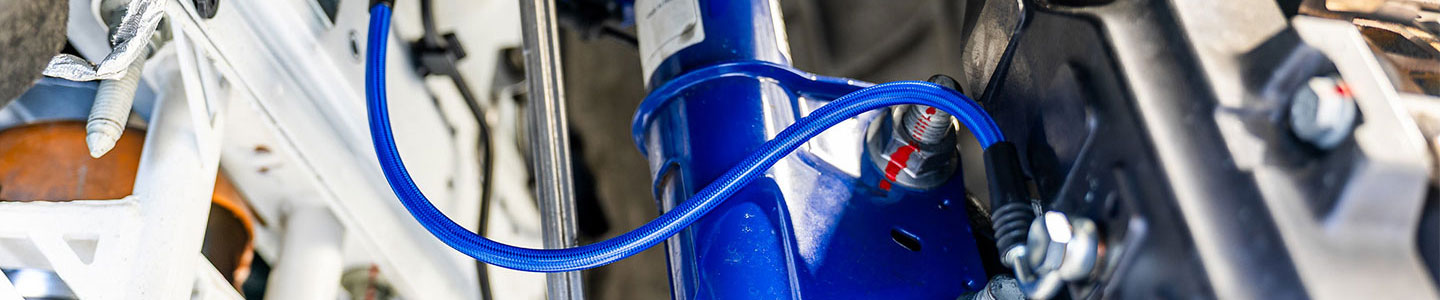
As demonstrated in Steeda's installation video, fitting stainless steel brake lines is a manageable job for any mechanically inclined enthusiast. Here's the basic process:
- Lift and secure the vehicle and remove the wheels to access the brake assembly.
- Disconnect the factory rubber hoses at both ends, at the hard line fitting and at the caliper. Have rags and a catch pan ready, as brake fluid will spill.
- Install the new stainless lines, hand-tightening first, then torquing to spec. Ensure the line is routed cleanly without kinking or contacting any moving parts.
- Bleed the brake system thoroughly to purge all air from the lines before driving.
- Test carefully at low speed before returning to normal driving.
The driving impressions segment of Steeda's video captures the result well: engagement is immediate, the pedal is firm, and there's a clear sense of increased confidence in braking response, especially under harder application.
Who Should Upgrade?
Stainless steel brake lines are a smart upgrade for:
- Mustang owners (S650, S550, S197) and other performance vehicle enthusiasts who want a more connected driving experience
- Anyone whose rubber hoses are more than 6 years old and showing signs of softening or wear
- Track day drivers and autocross competitors who need consistent, fade-resistant braking under repeated hard stops
- Drivers who have already upgraded pads, rotors, or calipers and want their brake lines to match the performance level of the rest of the system
For casual daily drivers who brake gently and never push the limits of their vehicle, factory rubber lines are adequate. But if you've upgraded your wheels, suspension, or engine, and haven't touched the brakes, this is one of the highest-value improvements you can make.
Steeda's Stainless Steel Brake Line Lineup
Use this table to quickly compare the key characteristics of each suspension modification.
| Vehicle | Application |
|---|---|
| S650 Mustang | Brembo Package, MagneRide, and Base variants |
| S550 Mustang | Non-MagneRide and MagneRide variants |
| S197 Mustang | GT / GT500 |
| Ford Fusion | CD4 Platform |
| Ford Focus | Rear lines |
Each kit is engineered to be a direct, bolt-on replacement with no modification required, and includes all necessary hardware for a clean installation.
A spongy brake pedal isn't something you just live with, it's a sign that your hydraulic system is losing pressure to hose expansion. Upgrading to stainless steel brake lines eliminates that energy loss and gives you a firmer, more accurate, and more consistent pedal from the first stop.
It's one of the more straightforward performance upgrades available, delivers an immediately noticeable real-world result, and pays dividends every single time you need to stop, whether that's on the street, the track, or in an emergency.
If your Mustang or Ford vehicle is due for a brake refresh, this is the upgrade to make first.
Ready to Transform Your Mustang, Fusion, or Focus?
Browse Steeda's inventory of Stainless Steel Brake Line Kits or contact our team for expert recommendations tailored to your Ford's goals.
Shop Brake Lines at Steeda