

Click anywhere to close
F-150 Rear Sway Bar: What It Does, Why It Matters, and How to Upgrade
Why does your F-150 lean hard in corners? The factory left off the rear sway bar. Here's what it does, who needs it, and how Steeda's adjustable bar fixes the problem.
Your F-150 leans hard into corners. The rear feels loose on highway ramps. Hook up a trailer and it gets worse in a hurry. If that description sounds familiar, there's a specific mechanical reason for it, and it's not a flaw in your driving.
Most F-150s are factory-tuned for payload and towing duty, which means the rear suspension is calibrated for flexibility rather than remaining tight through corners. Adding a rear sway bar is one of the most direct ways to unlock the handling the platform is capable of on pavement. By the end of this article, you'll know exactly what a sway bar does, why most trucks ship without one at the rear, how to tell if you need one, and whether the Steeda adjustable rear sway bar is the right fit for your truck.
Watch the Install & Review
What Is a Rear Sway Bar on a F-150?
The Basic Function
A rear sway bar, also called an anti-roll bar or stabilizer bar, is a steel bar that runs laterally across the rear axle and connects to the truck's frame through end links and bushings.
When your truck's body leans into a corner the bar transfers load across the axle. It pushes back against the lean, keeping the body more level and keeping both rear tires in better contact with the road surface. The result is a rear end that feels composed rather than loose.
What a Sway Bar Does NOT Do
A rear sway bar only activates during body roll, cornering, lane changes, wind gusts, and trailer sway. On a straight, smooth road, the bar is essentially dormant. It has no effect on straight-line ride quality, so the F-150's comfortable highway manners stay exactly as Ford intended.
A sway bar is also not a load-support device. It does not raise the truck, compensate for payload weight, or substitute for properly rated springs when you're towing at capacity. It works alongside those components, not instead of them.
Why Doesn't the F-150 Come with a Rear Sway Bar From the Factory?

Here's the fact that surprises most F-150 owners: the majority of 2004–2026 F-150s leave the factory with a front sway bar and no rear sway bar at all. A few notable exceptions exist, the '97–'04 Lightning and select Harley-Davidson editions among them, but for the overwhelming majority of trims, the rear axle is unbraced from the factory.
Ford's reasoning is rooted in what the F-150 is primarily built to do. The suspension is tuned first for payload, towing, and uneven terrain. In those applications, rear suspension articulation is an advantage, independent rear wheel movement keeps tires planted on rough ground. A rear sway bar limits that articulation, so Ford made the trade-off in favor of off-road and work-truck capability.
Why You Should Get One for Your F-150
For the large portion of F-150 owners who daily drive on paved roads, commute on highway, tow on interstates, or prioritize handling alongside capability, a rear sway bar is an opportunity to add to the capabilities and performance of your truck.
The rear sway bar is one of the most consistently recommended upgrades in F-150 owner communities because it improves the on-road handling of the truck, and for those that are just driving to work every day, or hauling a trailer from point A to point B, a rear sway bar can drastically improve your F-150’s handling.
The Steeda Adjustable Rear Sway Bar: Product Review
So what's the fix? For 2015–2026 F-150 owners, the Steeda adjustable rear sway bar is the most purpose-built option available. Steeda has been developing Ford-specific performance parts for over 35 years, and the rear sway bar reflects that depth of knowledge.
Which Version Do You Need?
Steeda makes two variants for the current-generation F-150. Make sure you order the correct one for your drivetrain:
| Variant | Part Number | Fitment |
|---|---|---|
| 4WD | 555 1027 | 2015–2026 F-150 4WD |
| 2WD | 555 1026 | 2015–2026 F-150 2WD |
Construction and Materials
The bar itself is solid steel at 1-1/8" diameter. Where the Steeda unit separates itself from most competitors is in the end fittings: they're billet steel, machined from solid stock rather than coined (stamped). That distinction matters more than it might seem. Stamped ends are formed under pressure, which can introduce stress points along the metal grain. Billet ends are cut from a solid billet, leaving the grain structure intact and the part significantly stronger. Under repeated load cycling, which is exactly what a sway bar experiences, that's a meaningful durability advantage.
Adjustable Stiffness Settings
Unlike a fixed-rate bar, the Steeda unit offers multiple stiffness settings that can be adjusted with the bar still installed on the truck. That flexibility means you're not locked into a single calibration. Run it stiffer when you're towing or driving spiritedly, dial it back slightly if daily comfort is the priority. Competitors often require bar removal to change settings, which effectively means most owners never adjust them. Steeda's design removes that barrier.
Lift Kit Compatibility
Most F-150 owners are running some kind of leveling or lift kit, and that's where a lot of aftermarket sway bars run into trouble through the length of the end-link. Steeda's adjustable end links handle stock ride height and lifts up to 2 inches without modification, which covers nearly every common leveling setup and milder lift setups. If your truck is sitting higher than 2 inches, give Steeda a call before you order.
No Permanent Modifications Required
No cutting, no welding, no drilling. The Steeda bar is a bolt-on installation. That's to the benefit of both the owners who prefer to keep their trucks reversible and for anyone planning a future build where component changes are likely.
Installation Overview
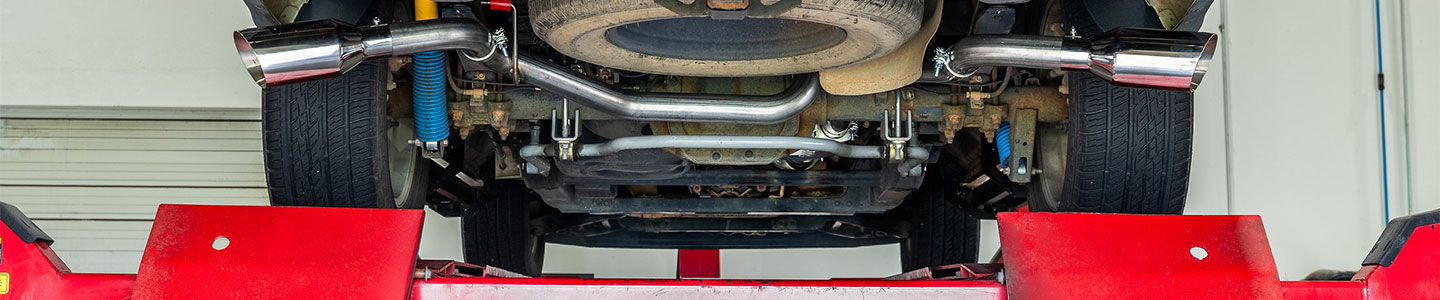
The installation is fully bolt-on. There's no cutting, welding, or drilling into the frame at any point. For a home mechanic with basic hand tools, a floor jack, jack stands, and a torque wrench, this installation is easily doable.
What You Need
- 16mm, 17mm, ¾” (deep) sockets
- 3/8” ratchet w/ extension
- Wire cutters
- 17mm, ¾”, and 15/16” box end wrenches
- Floor jack and jack stands, or better yet, a lift
Step-by-Step Overview
- 1. Stage the flag nuts. Slide the provided flag nuts inside the crossmember on each side of the truck and position them as shown in the included instructions.
- 2. Mount the end link pivot brackets. Fasten the brackets into the crossmember using the provided 12mm flanged bolts. Torque to 50 ft-lbs.
- 3. Cut the guide wire. Once the flag nuts are secured, cut the guide wire off with wire cutters — it's a temporary positioning aid, not a permanent component.
- 4. Assemble the end links loosely. Insert the long end of each end link into its pivot bracket and loosely attach using the provided 10mm hardware. Do the same connecting the sway bar to the end links. Keep everything loose at this stage — you'll need adjustment room once the bar is positioned.
- 5. Unclip the passenger-side brake line. This gives the necessary clearance to position the bar correctly against the axle.
- 6. Position the U-bolts and install the bar bushings. Slide the provided U-bolts over the axle in the locations indicated by the bar's final position. Grease the sway bar bushings, install them on the bar, and add the mounting brackets.
- 7. Mount the bar to the axle. Line up the axle tube brackets over the sway bar brackets so the slots align, then swing the bar into position so the brackets engage the U-bolts. Secure with the provided 1/2" flanged nuts and torque to 50 ft-lbs.
- 8. Set the end link geometry. Using a 3/4" box-end wrench on the adjuster, set each end link until the sway bar sits parallel to the ground.
- 9. Lock it down. Tighten the end link jam nuts with a 15/16" box-end wrench, then torque the end link bolts to 40 ft-lbs.
- 10. Test and verify. Take the truck for a short test drive, then inspect the bar's position and clearance from brake lines, wiring harnesses, and exhaust components. Confirm nothing has shifted and all fasteners remain at spec.
Professional Installation
If you'd prefer to have the bar installed by the team that engineered it, Steeda's performance shop handles professional installation. Call 1 (800) 950-0774 or visit our service page to book an appointment.
For specs, hardware callouts, and reference figures, download the complete PDF installation instructions here.
Is the Rear Sway Bar Upgrade Right for Your F-150?
Best Suited For
- Daily drivers who notice rear body lean in corners and want it corrected without giving up ride comfort
- F-150 owners who tow on highways and want improved trailer stability at speed
- Trucks running a leveling kit that have lost some of the factory handling balance
- Street and mild performance builds where handling is a priority alongside appearance
Less Critical For
- Dedicated off-road builds where maximum rear wheel articulation over rocks and uneven terrain is the primary goal, the bar does limit independent rear wheel travel
Frequently Asked Questions

No. The sway bar only activates during body roll, cornering, lane changes, or trailer sway. On a straight, smooth road the bar has no effect on ride feel. Your truck's everyday comfort is fully preserved.
Yes. The adjustable end links included with the kit accommodate stock ride height and lifts up to 2 inches, which covers most leveling kit setups. If you're running a lift greater than 2 inches, contact Steeda before purchasing to confirm fitment.
For a home mechanic with basic tools and jack stands, yes. Most owners report the installation takes between one and two hours. No permanent modifications to the truck are required. Steeda's professional installation service is available for those who prefer it.
It does, particularly for highway towing where trailer sway is a concern. The bar improves lateral stability, which reduces the conditions that allow sway to develop. It works best alongside properly rated springs and shocks rather than as a replacement for them.
Ford tunes the F-150's suspension primarily for payload capacity and off-road capability, where rear suspension flex is an advantage. A rear sway bar limits that flex, so Ford left it off most trims as a trade-off. For owners who daily drive or tow on roads, that trade-off doesn't make sense, which is exactly why the aftermarket upgrade exists.
The F-150's handling weakness in corners and under tow is not a flaw in the truck, it's the result of a deliberate factory decision that fits some applications. For daily drivers, tow rigs, and trucks with leveling kits, a rear sway bar corrects that omission cleanly and immediately. The ride quality you like stays. The rear-end handling behavior you don't gets replaced with something that inspires confidence.
Ready to Get Your F-150 Sway Bar?
Steeda F-150 4WD Adjustable 1-1/8" Rear Sway Bar (2015-2026) Steeda F-150 2WD Adjustable 1-1/8" Rear Swaybar (2015-2026)Steeda Autosports has been the authority in Ford performance since 1988. From chassis reinforcement to full suspension systems, every product is engineered specifically for Ford vehicles and backed by a team that drives what they build.